

Every ERP migration or upgrade has one overriding Holy Grail goal, one stamped on the brains of ERP project leads everywhere. Hit the promised go-live date. Missing it can cause the C-suite to view the project’s execution as flawed at best and failed at worst.
Delivering an on-time ERP migration or upgrade depends on hundreds of decisions teams make long before cutover. Among these decisions is one that organizations unfortunately still underestimate the value of:
Involving EDI/B2B integration leaders in planning from the beginning.
But doing so delivers a host of benefits that no ERP migration project manager would turn down if they had a choice. And they do.
Why Collaborative Planning Produces Better ERP Outcomes
Remedi Vice-President of Services and Software Scott Hulme explains the value of early collaborative planning.
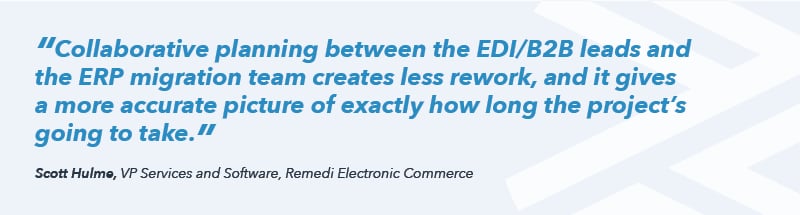
“Collaborative planning between the EDI/B2B leads and the ERP migration team creates less rework, and it gives a more accurate picture of exactly how long the project's going to take.”
When EDI/B2B/system integration teams participate in upstream planning, they can identify
mappings, workflows, trading partner dependencies, testing requirements, and downstream impacts while the project plan is still flexible.
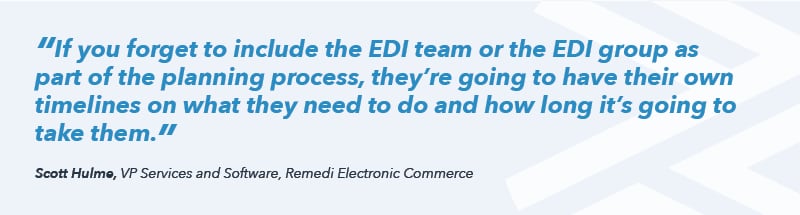
Hulme adds, “If you forget to include the integration team or the EDI group as part of the planning process, they're going to have their own timelines on what they need to do and how long it's going to take them."
Early collaboration leads to more predictable schedules and fewer last-minute issues.
Why EDI/B2B Integration Gets Overlooked in ERP Migrations
Many naturally concentrate on the ERP because it is the centerpiece of the organization. Historically, EDI was viewed as a data transformation process that could be connected later. But that’s an outdated view of migration reality.
Modern integration platforms support far more than document translation. They orchestrate business processes, connect trading partners, and integrate applications across the enterprise.
Ignoring those dependencies until late in the project often creates avoidable delays, stakeholder frustration, additional testing, and unnecessary cost.
What a Framework for Collaborative ERP Planning Looks Like
Successful ERP migration support begins by bringing ERP architects, business stakeholders, and EDI/B2B integration leads together during planning. During these sessions, project leads:
- Define integration touchpoints
- Discover differences in ERP data/transaction layouts
- Inventory trading partners and interfaces
- Align testing schedules
- Validate cutover activities
- Revisit those plans at key milestones
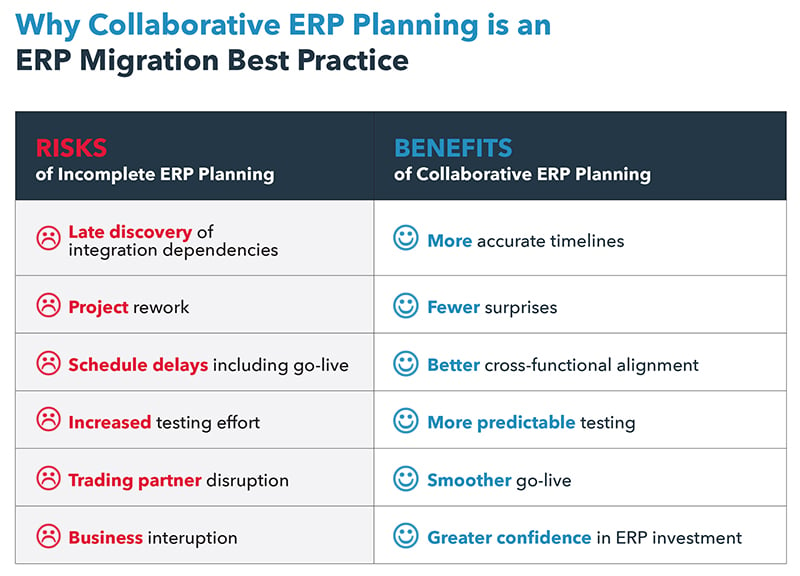
According to Remedi President Brad Loetz, “Successful migrations happen when every critical integration touching the ERP is treated as part of the implementation strategy—not simply a task to complete before go-live.”
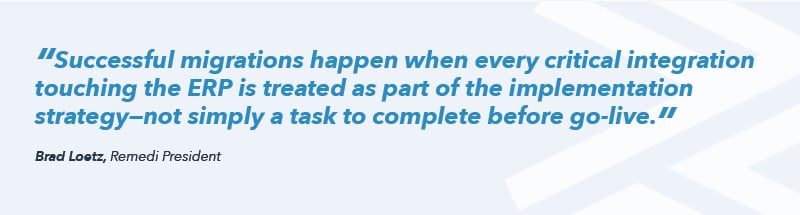
What is The Payoff for Collaborative Planning?
Scott Hulme offers another reminder that applies to every migration: "Whoever's running the IT group has to understand how critical business and system integrations are to extended ERP functionality and visibility. All the tools within your IT environment have to work together, and they should all be accounted for."
Holistic, collaborative ERP planning helps organizations:
- Reduce business disruption
- Avoid frozen order-to-cash and procure-to-pay cycles
- Minimize trading partner issues
- Maintain ROI confidence in major ERP investments
- Hit promised milestones including go-live dates
Whether SAP S/4 HANA, JD Edwards, Microsoft Dynamics 365, or another vendor platform, migrating to a new ERP environment often introduces drastically different data schemas, field lengths, and validation logic to the mix.
Which is why we advise EDI/B2B integration teams to align early with their ERP counterparts to map these structural changes against external partner requirements.
B2B integrations are a core architectural pillar of the new or upgraded ERP system. Treating them as an afterthought can derail project progress and undermine stakeholder confidence in the investment.
ERP migrations that meet the Holy Grail of hitting the promised go-live date can create a general “worth the trouble” vibe in the C-suite long before managers start reporting performance metrics against KPIs.
Need ERP Migration or Upgrade Support?
Remedi helps organizations plan and execute ERP migrations from an EDI/B2B/system integration perspective. Siloed operations during ERP change can frequently trigger supply chain disruptions, data transformation challenges, and missed go-live deadlines.
Involving experienced integration specialists early can reduce the risk of such outcomes. It can also improve the likelihood of a successful go-live.
If your migration or upgrade includes complex trading partner, system integration, or workflow requirements, we can help. Reach out here to start a no-pressure conversation about your ERP project.
About Us
Remedi helps customers succeed with the platforms they prefer, from IBM, Cleo, Microsoft, 1 EDI Source, SEEBURGER, Boomi, OpenText, and beyond.
FAQs
1. Why should EDI/B2B integration teams be involved early in an ERP migration?
Including EDI/B2B integration leaders early helps identify integration dependencies, testing requirements, and trading partner impacts before they become costly problems. Early collaboration also produces more realistic project timelines and reduces the likelihood of last-minute rework that can delay go-live.
2. Do I need to include EDI planning on a modern ERP platform migration such as SAP S/4 HANA?
Yes. While SAP S/4 HANA migrations often highlight the importance of integration planning, the same best practices apply to virtually every ERP migration, including JD Edwards, Oracle, Microsoft Dynamics, and other enterprise platforms. Any project that affects business data or transaction flows benefits from early collaboration between ERP and integration teams.
3. When should EDI/B2B integration planning begin during an ERP implementation?
The implementation work itself may occur later in the project, but planning should begin much earlier. Bringing EDI/B2B integration specialists into the planning process helps identify dependencies, align testing schedules, and avoid unexpected issues that can extend timelines or increase project costs.
4. Who should be involved in ERP migration planning to reduce implementation risks?
Successful ERP migrations require input from ERP leaders, business stakeholders, and EDI/B2B integration experts. Including representatives from each area ensures that business processes, application integrations, and trading partner requirements are all considered before implementation begins.
5. When should organizations bring in outside ERP migration support or EDI/B2B integration consultants?
Organizations should consider bringing in outside expertise as early as practical, particularly when migrations involve complex integrations, multiple business applications, or extensive trading partner ecosystems. Experienced consultants can help identify risks, validate migration plans, and reduce costly rework before implementation is underway.