

Migrating to a new ERP, CRM, or WMS is a major future-proofing step. It can take years to complete these initiatives. During the discovery and planning phases, organizations hold many meetings with stakeholders from production, sales, finance, and logistics. Everybody, it seems, but EDI.
Perhaps it’s because EDI, like electricity, is invisible. It’s always on, and unless something breaks, it is easy to forget about. EDI teams often get involved last in big projects. These projects can impact every part of the organization. The C-suite hopes this will help the company stay competitive in the long run.
But when EDI is an afterthought, not great stuff happens. Topping the list of negative outcomes we’ve seen are cycles of workflow and map rework, missed go-live dates, and cost overruns.
This is the next article in our Integration Resiliency Series. Below, we explain why involving EDI earlier in the planning cycle instead of calling out the cavalry late in the process can help avoid delays. It also helps meet stakeholder expectations and delivers results sooner.
When Should You Include EDI in System Migration Planning?
Include EDI during the planning stage as soon as the owners of ERP, CRM, and WMS define requirements.
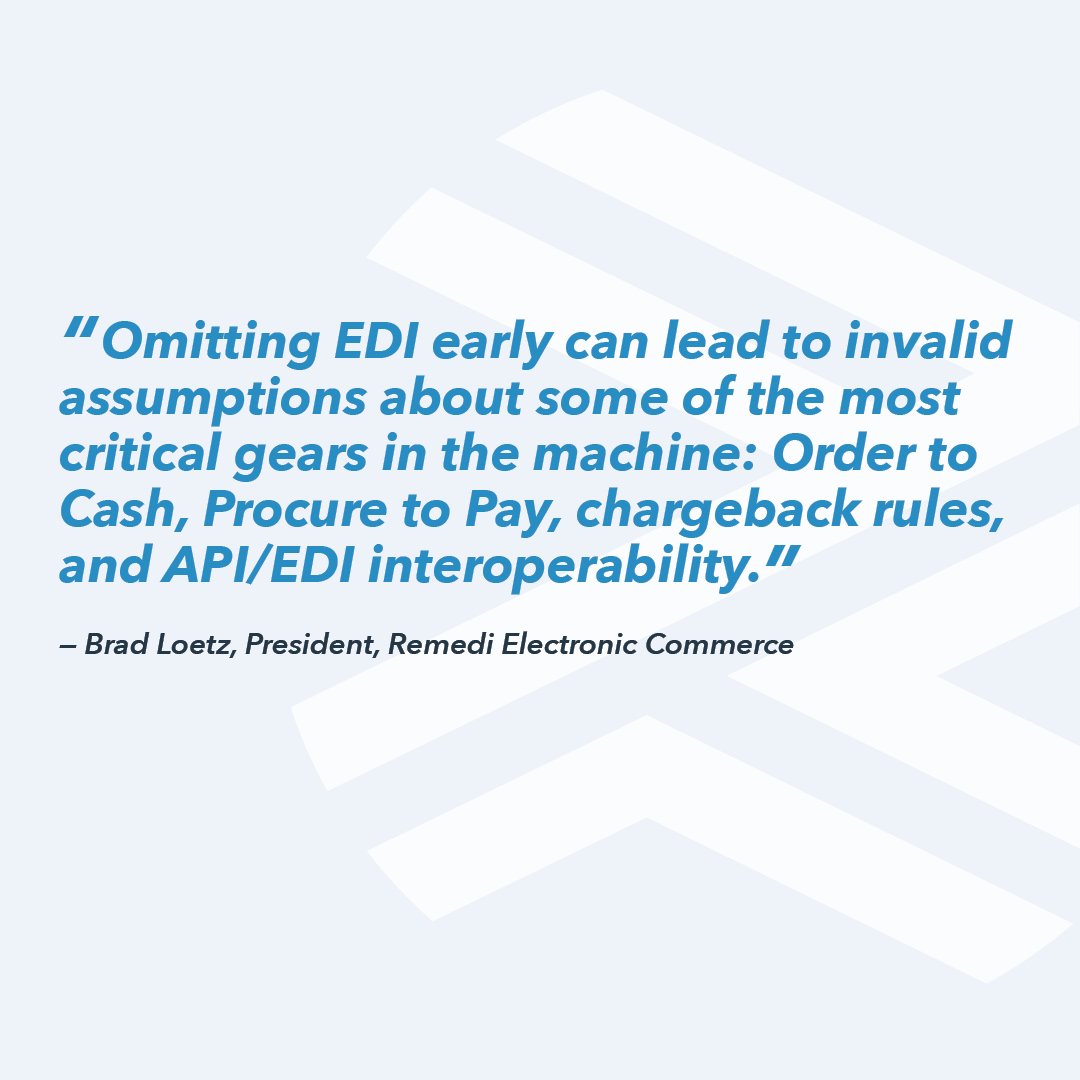
On the flip side, according to Remedi President Brad Loetz, “Omitting EDI early can lead to invalid assumptions about some of the most critical gears in the machine: Order to Cash, Procure to Pay, chargeback rules, and API/EDI interoperability.”
Most major platforms, including SAP S/4HANA, Microsoft Dynamics 365, and Blue Yonder WMS, advise documenting external dependencies (such as EDI) during the initial scope definition.
Why You Shouldn’t Wait Until the Last Mile to Include EDI
When companies plan an ERP migration or upgrade, it’s common for EDI to be treated as a bolt-on—something that will “just work” once the new system is in place. On paper, it seems like a logical assumption.
The transactions are already flowing, the trading partners are already connected, and the maps already exist. Plug and chug, right? If only it were that easy.
Every ERP migration can change the data model, document structure, or process flow in ways that directly affect EDI. If those changes aren’t addressed early, EDI becomes the speedbump that emerges that shows up after every other workstream is complete.
The takeaway here is that delays have a downstream materials, product, and financial impact. That’s because revenue-impacting transactions are the ones that suffer. EDI isn’t just infrastructure — it’s the key system that moves and integrates orders, shipments, invoices, remittances, and inventory updates.
When EDI breaks, cash flow stops until it’s fixed. And there’s a broader risk: when EDI isn’t addressed early, it doesn’t just strain existing trading partner relationships — it can stall plans to enter new revenue channels.
That’s because every new retailer, marketplace, distributor, or B2B portal has unique EDI requirements and certification steps. If your maps, processes, and integration points aren’t ready when the ERP goes live, you can’t onboard those partners, and the channel launch slips.
How EDI Teams Can Streamline Migrations and Accelerate Time to Value
Planning is key, and that means involving EDI teams early. This helps them grasp the business goals for the migration.
EDI teams reduce risk and support the migration timeline in several ways by:
- Validating potentially new data structures and fields
- Orchestrating partner testing and go-live
- Ensure that the new system correctly maps order-to-cash and procure-to-pay flows
In our experience, structured integration planning during migrations reduces rework. It also accelerates time to transformation value by capturing requirements up front.
Should You Bring in External EDI Resources to Support Your Migration?
The answer comes down to internal bandwidth and migration experience. If you have the staff, it makes sense to keep it all in-house. At the same time, in-house teams may be newbies to a big migration. Outside consultants usually have deep and recent experience with architecting and supporting a variety of platforms and journeys.
It’s not always a binary choice. Companies facing aggressive deadlines, staffing constraints, or expansion into new digital marketplaces often mix their own expertise with outside migration architects for better results.
Leverage Remedi’s Migration Support Experience
Customers in all sorts of industries hire Remedi to support bridging the last mile of system migrations. They do so for a variety of reasons. Key needs include stabilizing complex migrations, keeping legacy systems operating, preventing delays and errors, and achieving goals like entering a new sales channel.
If you have a big project mapped out for 2026 or even 2027, consider how your plans could benefit from working with a partner who brings deep migration and transformation project experience.
Reach out here to learn more about how Remedi can support your migration project. When it comes to migration planning, it’s never too early to start.
In the meantime, you can read what customers say about working with Remedi here.
Other Blogs in the Integration Resilience Series:
How EDI Managers Can Meet Pressure to Deliver Results Without Adding Headcount
What is Failure to Deliver Syndrome (FTDS) and How Can You Avoid It?
FAQs
Q1: When is the right time to involve EDI in an ERP, WMS, or CRM migration?
A: In the early discovery phase, when SMEs define data models and process flows. Waiting risks rework and missed go-lives.
Q2: How does EDI impact our ability to enter new channels like Walmart Marketplace?
A: Retail marketplaces need validated EDI/API workflows before orders can drop. Any delays in EDI readiness postpone channel entry and revenue.
Q3: What specific tasks does the EDI team handle during a migration?
A: Change and validate mappings, test with partners, handle exceptions, and perform end-to-end integration testing. Also, they ensure the order, shipment, and invoice flows work smoothly on the new platform.
Q4: Can our internal team do all of this without external help?
A: Yes, assuming they have the bandwidth and migration experience. Large systemic migration initiatives are rare. This is because they are costly, complex, and can cause disruption.
Many teams lack migration experience, and that’s where supplemental expertise can help keep the project on track.
Q5: What if we run into unexpected EDI issues late in the project?
A: It happens. A quick assessment and focused map, and workflow fixes can stabilize the project and keep the go-live schedule on track.
Sources: