

Trading partner onboarding is the process of establishing reliable, secure connections for exchanging documents with customers, suppliers, and distributors. This involves configuring EDI partner setup, aligning document standards, and ensuring data can flow smoothly between systems. Despite its straightforward appearance, this process has a high rate of failure.
When onboarding is seamless, partners integrate quickly and collaboration begins without friction. But when onboarding stalls, organizations face missed deadlines, compliance issues, and reputational damage.
Let’s explore the main reasons onboarding fails and how proven Remedi onboarding solutions help IT leaders fix these issues.
Why Trading Partner Onboarding Fails
Smooth onboarding isn’t as simple as exchanging technical specs. It requires alignment across standards, communication, resources, and technology. Here are the most common reasons for failure.
Inconsistent Standards and Protocols
Different companies often use different technical frameworks, which can cause friction from the start. These inconsistencies make it difficult to align systems quickly and create avoidable delays in onboarding.
- Mismatched document versions. One partner may use ANSI X12 4010 while the other requires 5010, resulting in translation errors.
- Protocol disagreements. Whether to use AS2, SFTP, or another protocol can slow testing and approval.
- Outdated or missing documentation. Without current specs, mapping becomes guesswork.
Common Standard Conflicts in EDI Onboarding
The following table represents illustrative examples of standard conflicts frequently observed in EDI onboarding scenarios across various industries. While these reflect common issues encountered by integration teams, the specific errors and time lost are generalized estimates and not tied to any individual Remedi client engagement.
Poor Communication with Trading Partners
Onboarding often breaks down because partners are misaligned on expectations. Without clear and ongoing communication, even simple processes can become complex and time-consuming.
- Unclear requirements. When one side assumes compliance standards are obvious, costly errors follow.
- No escalation process. Small issues linger when teams don’t know whom to contact or how to resolve conflicts.
- Lack of shared timelines. Without mutually agreed-upon schedules, testing and go-live dates slip, frustrating both sides.
Limited Internal Resources and Expertise
IT teams juggle many responsibilities, and onboarding is just one of them. When resources are stretched thin, trading partner setup is often delayed or handled inconsistently.
- Staffing shortages. Dedicated onboarding requires time that understaffed teams often lack.
- Outdated skillsets. Legacy knowledge may not support newer EDI integration services or cloud-based systems.
- Competing priorities. When onboarding competes with security, upgrades, or compliance projects, it rarely gets the attention it needs.
Technical Complexity and Custom Requirements
Modern ecosystems rarely fit a one-size-fits-all model. Unique partner requirements and complex B2B integrations introduce additional steps that make onboarding more challenging.
- Data mapping issues. Complex transformation rules and partner-specific fields make EDI onboarding error-prone.
- Platform limitations. Older systems may struggle to support new or custom partner requirements.
- Custom partner demands. Some partners require non-standard document formats or unique business rules, adding layers of complexity to EDI partner setup.
Lack of Automation and Monitoring
Manual approaches slow down onboarding and introduce avoidable risk. Without automation and monitoring, small issues can escalate into larger disruptions before anyone notices.
- No real-time alerts. Errors go unnoticed until downstream systems break.
- Visibility gaps. Without monitoring dashboards, it’s hard to pinpoint where failures occur.
- High error correction costs. When automation is missing, fixing recurring errors requires significant manual rework and drains IT resources.
How to Fix It: Remedi’s Proven Approach
Remedi helps organizations turn integration challenges into success stories by applying proven frameworks, expert staffing, and managed services.
Here’s how.
Use of Integration Frameworks for Faster Setup
Pre-built components eliminate the need to reinvent the wheel with every new partner. By applying standardized processes, organizations can reduce setup times and achieve faster, more consistent results.
- Remedi Framework for IBM® Sterling B2B Integrator. This proprietary solution accelerates setup with reusable business processes and dashboards.
- Scalable architecture. Templates and flexible designs simplify repeatable partner additions.
- Fewer onboarding errors. Using frameworks reduces the chance of mistakes during partner setup and testing.

Supplement Internal Teams with B2B Integration Experts
Sometimes teams just need extra hands—or extra expertise. Bringing in external specialists ensures critical skills are available without overburdening internal staff.
- B2B integration consultants. Remedi’s experts cover EDI onboarding, API onboarding, and MFT solutions.
- Staff augmentation. Temporary or long-term support helps teams scale without full-time hires.
- Flexible engagement models. Organizations can scale support up or down depending on project demand.
Implement Managed Services for Long-Term Success
Ongoing support ensures your team isn’t burdened with day-to-day monitoring. Managed services allow organizations to maintain high system performance while freeing IT resources for strategic projects.
- EDI managed services. 24/7 support and proactive issue resolution keep onboarding and production stable.
- Customized SLAs. Services align with business priorities and compliance requirements.
- Continuous optimization. Managed service providers identify inefficiencies and recommend improvements over time.
Establish Clear Onboarding Processes and Communication Plans
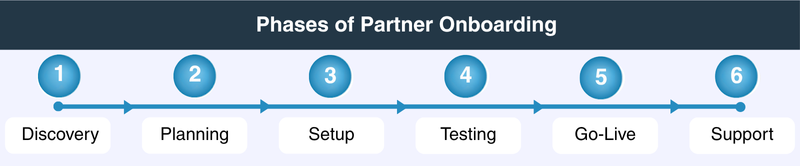
Structured onboarding avoids misunderstandings and wasted time. A well-defined plan keeps both internal teams and trading partners aligned from kickoff to go-live.
- Standardized kickoff. Use templates and documentation to align requirements upfront.
- Ongoing check-ins. Regular communication keeps teams in sync and prevents delays.
- Documented best practices. Standard operating procedures ensure onboarding is repeatable and consistent.
Upgrade Integration Tools When Needed
When technology itself is the obstacle, modernization is the answer. Upgraded tools provide scalability, reliability, and automation that older systems simply can’t support.
- iPaaS and cloud-based tools. Flexible, scalable solutions improve speed and reliability.
- Remedi-led transitions. Experts ensure smooth migrations without disrupting current operations.
- Improved partner experience. Modern platforms make it easier for new partners to connect and exchange data quickly.
For more information about trading partner onboarding, see our FAQ below.
Fixing Failures Before They Happen
The cost of failed trading partner onboarding—delays, lost revenue, partner frustration—is too high to accept as “normal.” By addressing integration challenges with frameworks, expert staff, automation, and modern platforms, companies can dramatically improve outcomes.
Remedi’s combination of EDI integration services, EDI managed services, and proprietary solutions ensures your onboarding process is efficient and sustainable. Whether you need help with EDI partner setup, support for API onboarding, or resolution of persistent data mapping issues, Remedi is ready to partner with you for long-term success.
Contact Remedi today for an onboarding health check and learn how to simplify partner relationships with confidence.

FAQs
What is trading partner onboarding in EDI?
Trading partner onboarding is the setup of secure electronic document exchanges with a partner, including communication protocols, data mappings, and compliance requirements.
Why does EDI onboarding often fail?
Failures usually result from inconsistent standards, poor communication, or limited internal expertise, not just technical problems.
How do managed services improve onboarding?
EDI managed services provide proactive monitoring and expert support, reducing downtime and freeing your IT team for other priorities.
What is the role of data mapping in onboarding?
Accurate mapping ensures business documents flow correctly between systems. Data mapping issues are a top cause of onboarding delays.
How can Remedi help my business?
Remedi offers consulting, staff augmentation, frameworks, and Remedi onboarding solutions that accelerate onboarding and simplify long-term B2B integration.