

Get a quote. Track an order. See test results. Confirm payment method. APIs are what make instant connectivity possible in our daily lives. Growth-focused organizations can’t compete in today’s on-demand economy without APIs in their integration environments.
This is the last article in our four-part series, The Modern Integration Mix. We devoted the series to illustrating the unique but complementary roles EDI, MFT, EAI, and APIs play in modern integration environments.
Links to the other articles in the series appear at the end of this one.
First, let’s define what an API is and what it does.
What Is an API?
An API is a set of rules that, according to IBM, lets one software system interact with another. It defines what one system can request, how it must make the request, and what the other system will return.
APIs, with roots in reusable software libraries from the late 1940s, have grown into messengers. They send requests between systems and return responses. In short, APIs are the link that allows different technologies to communicate smoothly.
To illustrate what a big deal this is, let’s look at the impact of APIs on the airline industry.
APIs let customers book flights easily. They can manage details like dates, cities, and baggage options. Menus show them all their choices.
This means that you don’t have to be a travel agent to navigate the reservation system or find the best deals. All you need to know is where you want to go, when you want to leave and return, and what you want to pay.
APIs let you request fares and seat availability from airline reservation systems. Travel sites gather info from many carriers. APIs let you compare booking options from multiple airlines.
Airlines may not love the intense pressure aggregator sites put on profit margins, but consumers came out ahead. Airline competition helps keep air travel affordable. Still, the meaning of "affordable" can vary, especially with current inflation.
APIs created a whole new industry of travel portals. They let buyers see more information without the barriers set by traditional gatekeepers. APIs have transformed many industries, including hospitality, personal transportation, and healthcare.
APIs didn’t cause the shift in control from sellers to buyers we’ve seen accelerate since COVID-19 forced millions to work and shop from home.
But the expectations for convenience and visibility that came along could not have happened without them.

What Role Do APIs Play in the Modern Integration Mix?
APIs provide fast access to data and functions. They work best when a system needs an immediate response or must trigger a specific action.
For example, a camping goods retailer may use an API to check inventory before a customer places an order for the butane stove they need for the weekend. EAI can pass the order between its commerce, payment, and warehouse systems.
From there, EDI can send a purchase order to a supplier and return the shipping notice and invoice. Not every type of integration participates in every interaction. APIs give quick access to functions and data. This speeds up business processes and makes digital experiences more responsive.
That responsiveness can and does improve customer service and the buying experience. APIs can also help manufacturers grow revenue and sell directly to consumers via new online sales channels.
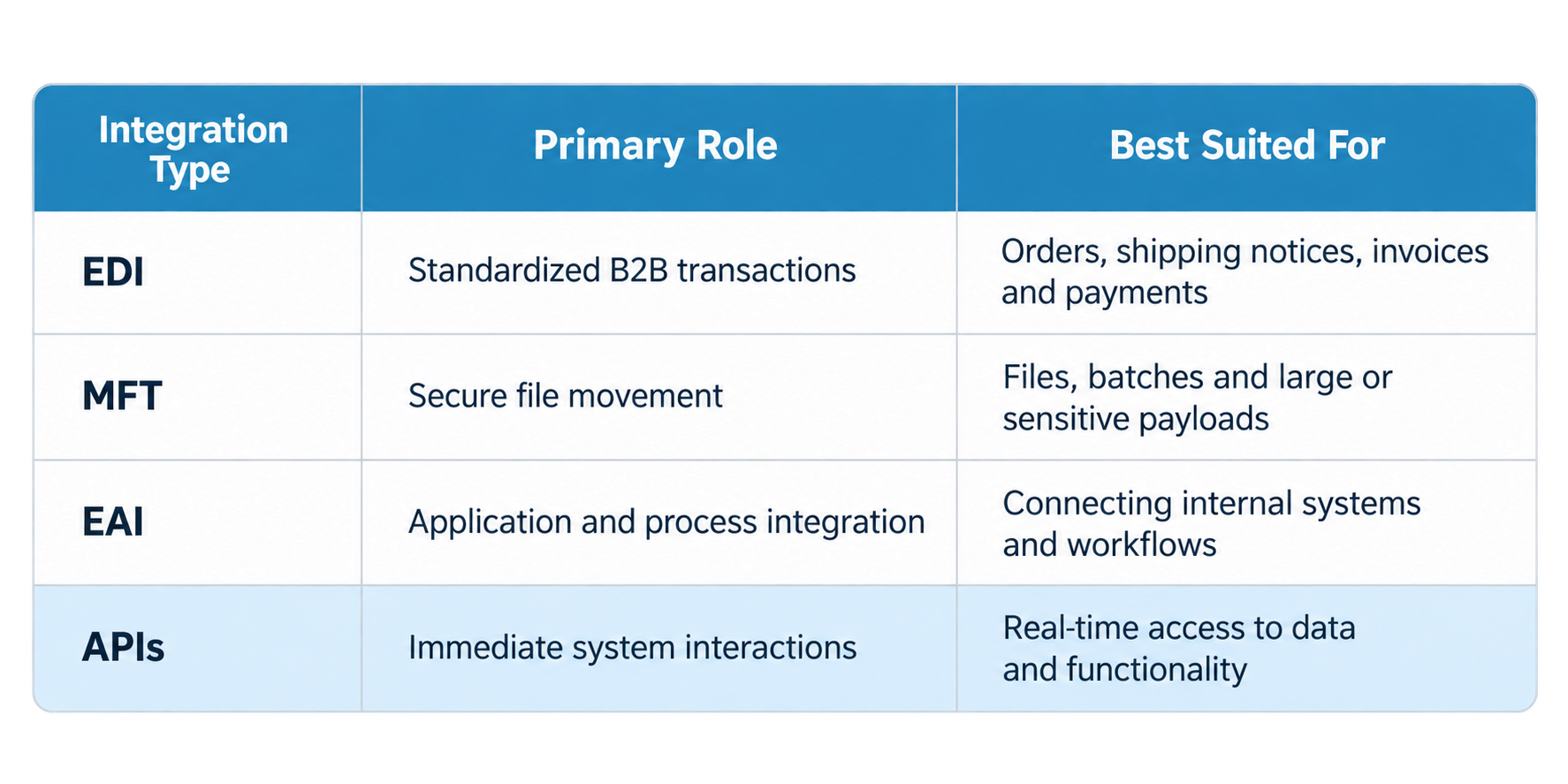
APIs provide immediate access to data and functionality across the integration environment.
What Are the Risks of Poorly Managed APIs?
APIs appeal to developers because they are fast and flexible. But those same traits can make them fragile. Weak design may lead to unclear data rules, slow response times, duplicate calls, and links that break when one side changes.
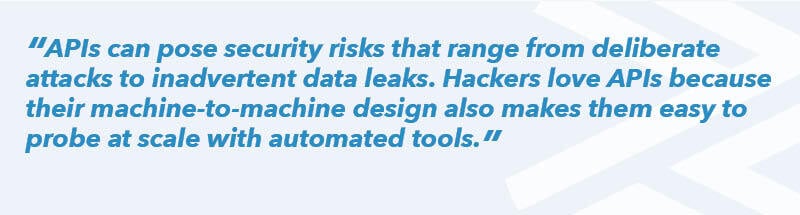
APIs may also pose security risks that range from deliberate attacks to inadvertent data leaks.
According to Akamai, hackers love APIs because their machine-to-machine design makes them easy to probe at scale with automated tools. Common risks include:
Direct access to functions: Attackers can send requests directly to API endpoints. They bypass the screens and menus meant for users.
Excessive data exposure: A bad API design might send back extra information. This can include sensitive personal or account data that the requesting system doesn't need.
Unrestricted request volume: Weak limits can allow attackers to test stolen credentials, scrape data, or flood systems with automated requests.
These risks do not make APIs less essential. They explain why organizations should view APIs as shared business infrastructure, not just one-time technical links.
Where Can I Get Support for My Integration Architecture?
Contact Remedi for help assessing, modernizing, staffing, or supporting the integration environment your business depends on.
Links to Series Articles:
https://www.remedi.com/blog/the-modern-integration-mix-why-edi-still-runs-global-supply-chains
https://www.remedi.com/blog/the-modern-integration-mix-where-mft-belongs
https://www.remedi.com/blog/the-modern-integration-mix-how-eai-connects-the-enterprise
About Us
Remedi helps customers succeed with the platforms they prefer, from IBM, Cleo, Microsoft, 1 EDI Source, SEEBURGER, Boomi, OpenText as well as custom and legacy solutions.
FAQs
1. What is an API?
An API is a set of rules that lets software systems exchange data or request an action. It defines how one system makes a request, what information it requires, and how the other system responds.
2. What are APIs best used for?
APIs are often best for fast, direct access to data or services. Common uses include inventory checks, shipment tracking, price quotes, address validation, payments, and workflow triggers.
3. Will APIs replace EDI?
Not in most modern environments. APIs can support some of the same exchanges, but EDI provides shared standards for high-volume business documents across large trading networks. Many organizations use both.
4. What can make an API integration fail?
API links can fail because of poor design, weak documentation, access issues, response delays, traffic spikes, data errors, or changes made without sound version control.
5. How do APIs work with EAI and MFT?
An API can start a process or provide data. EAI can coordinate the work across internal apps. MFT can move large or scheduled files. Together, they can support one end-to-end workflow.